New Botanical Art & Photography Show in Southern Africa
Karen Stewart, Chair of BAASA (Botanical Artists' Association of Southern Africa WC Branch) has kindly shared the catalogue and press release for this year’s edition of their fantastic new exhibition, click on the buttons below for these. If you know of any collectors who like South African plants please feel free to forward to them to Karen, email above.
Photos below from the Opening Night:
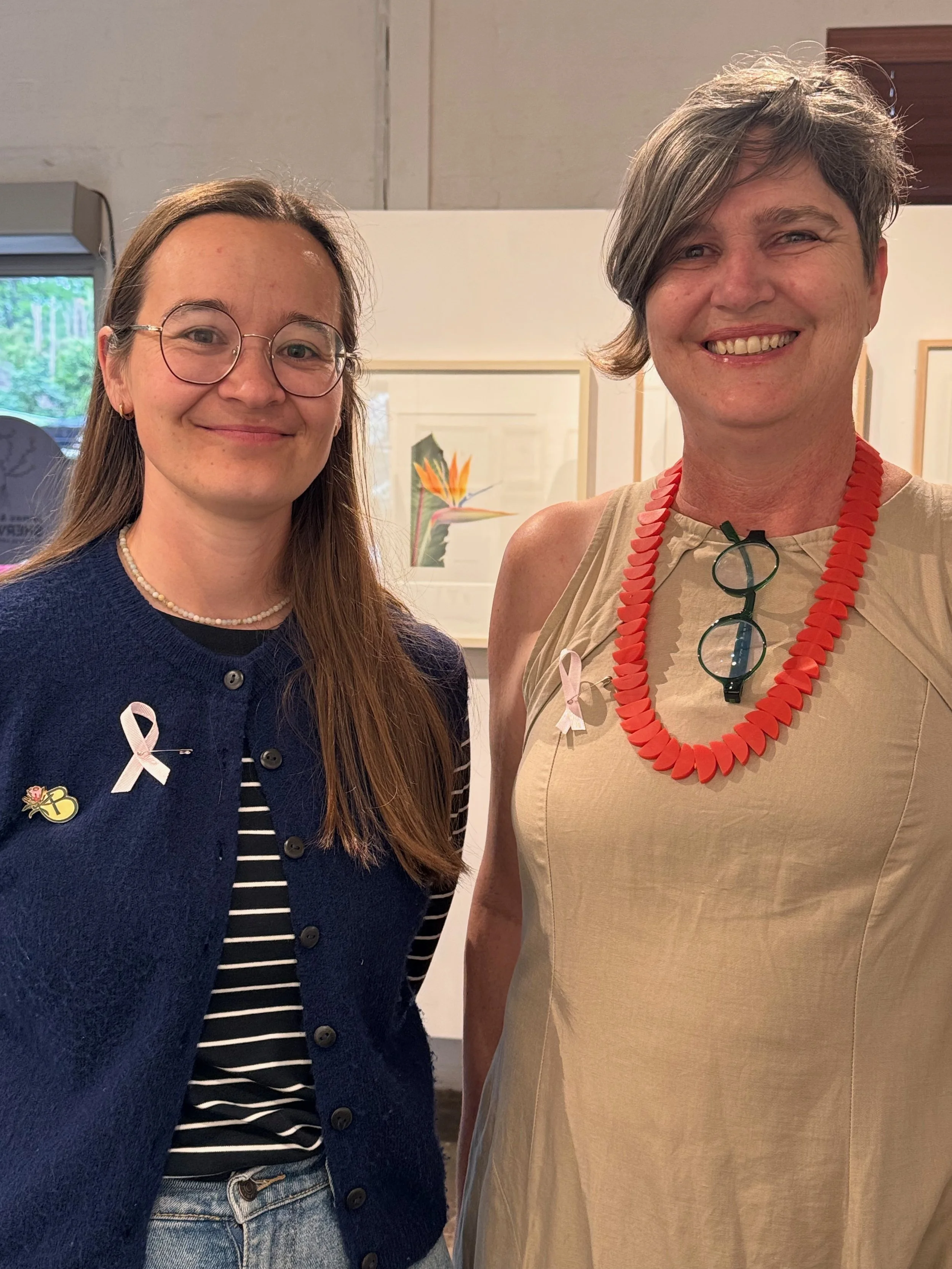
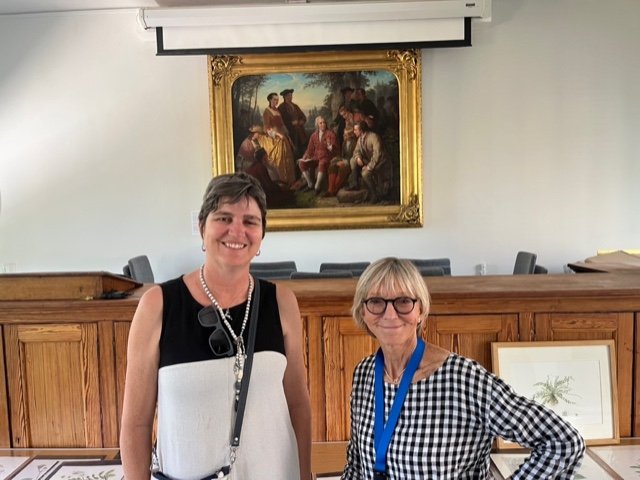
Annerie Senekal (first female curator of the SUBG), Karen Stewart (Botanical Art Curator)
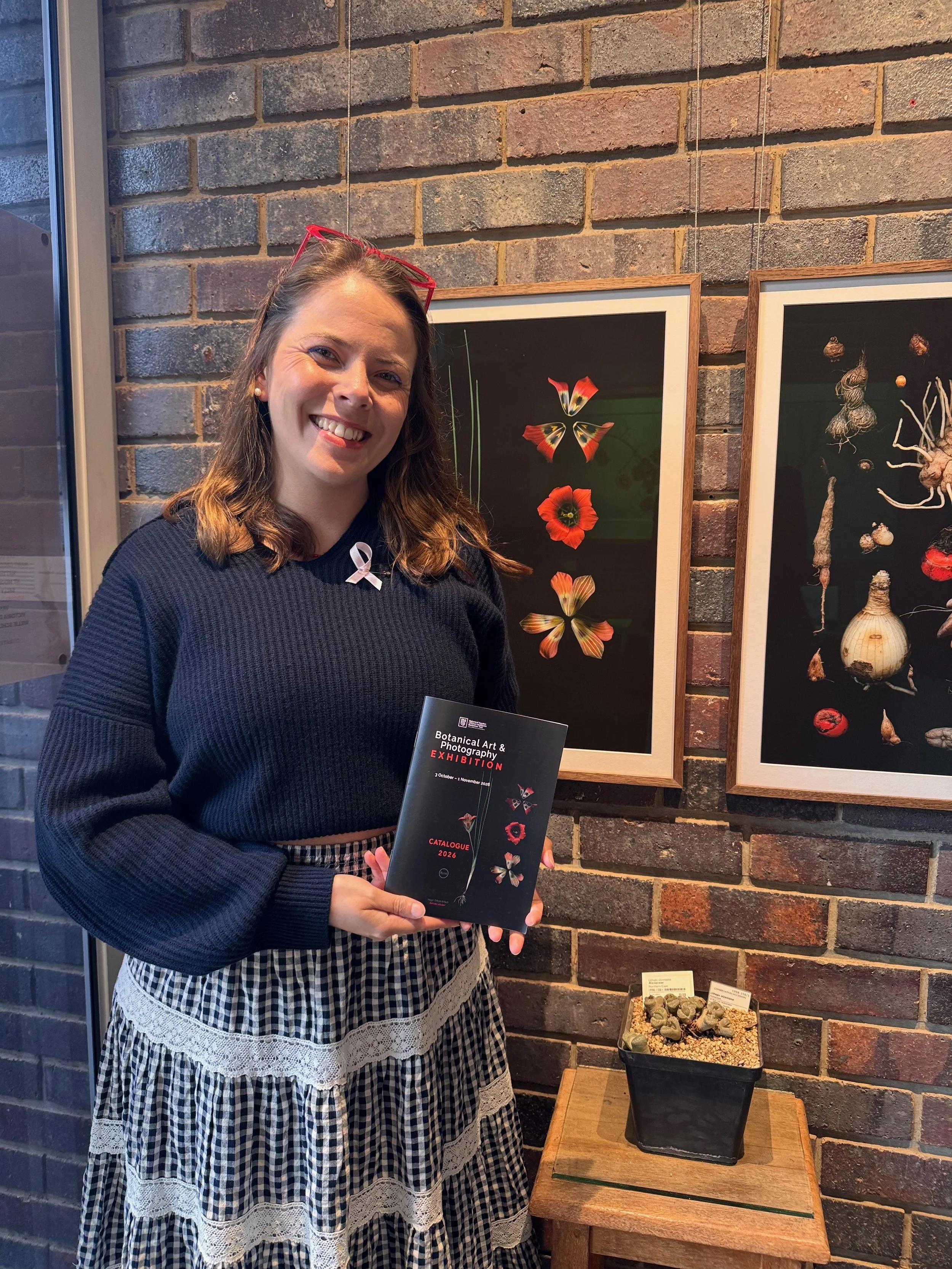
Celeste de Kock with the exhibition catalogue featuring her scenography of Romulea sabulosa
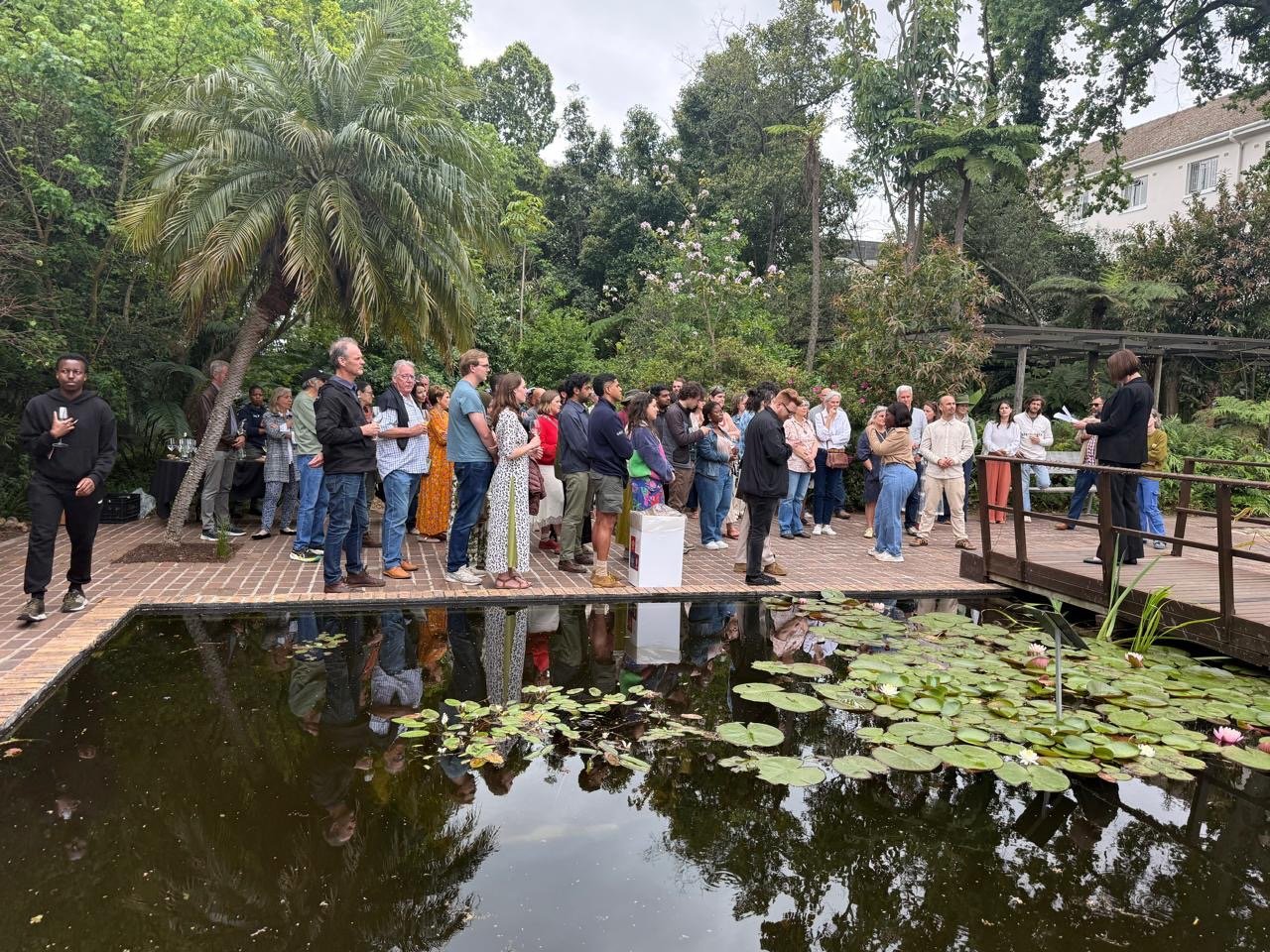
Opening speech by Anita Nel by Chief Director of Innovation and Commercialisation at Stellenbosch University

“The Flora of Iraq”, by Andrew Brown
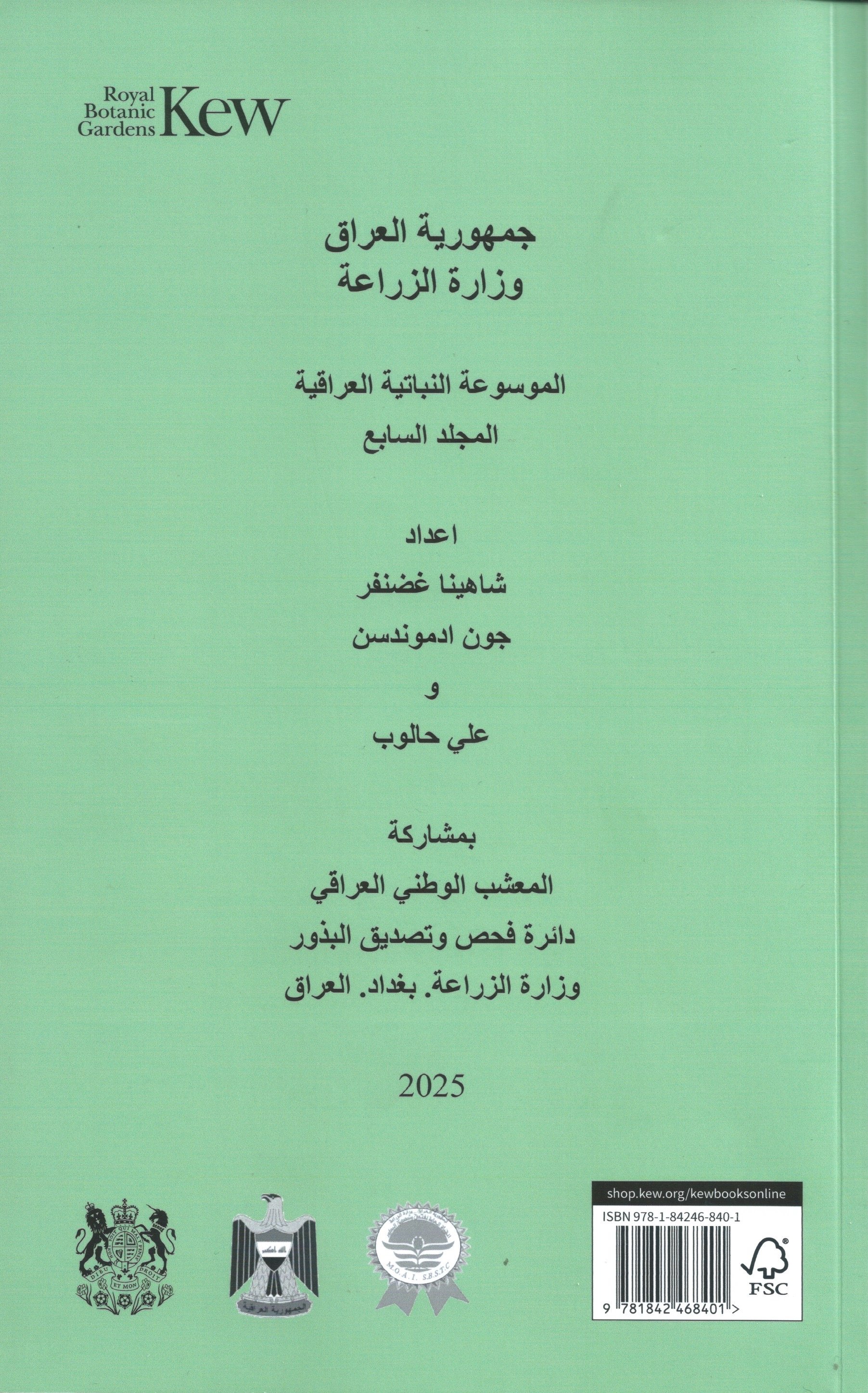
The Flora of Iraq, published on behalf of the Ministry of Agriculture of the Iraqi Government and edited by Kew and Iraqi botanists, was initiated 60 years ago in 1966. Kew holds good collections of Iraqi herbarium specimens and I have drawn 67 taxa which have appeared in three of the volumes of the Flora. The project halted following the Iraq war and was re-started about 2010 with the encouragement of Professor David Mabberley, Keeper of the Herbarium at Kew (who, incidentally, had been best man at my wedding in 1970). There are nominally seven volumes but volume 5 comes in three parts. I have provided 67 illustrations overall of which 45 appear in the final volume. It is printed on demand and the official retail price is £90. Volume 7 has 513 pages and weighs in at 932 grams.
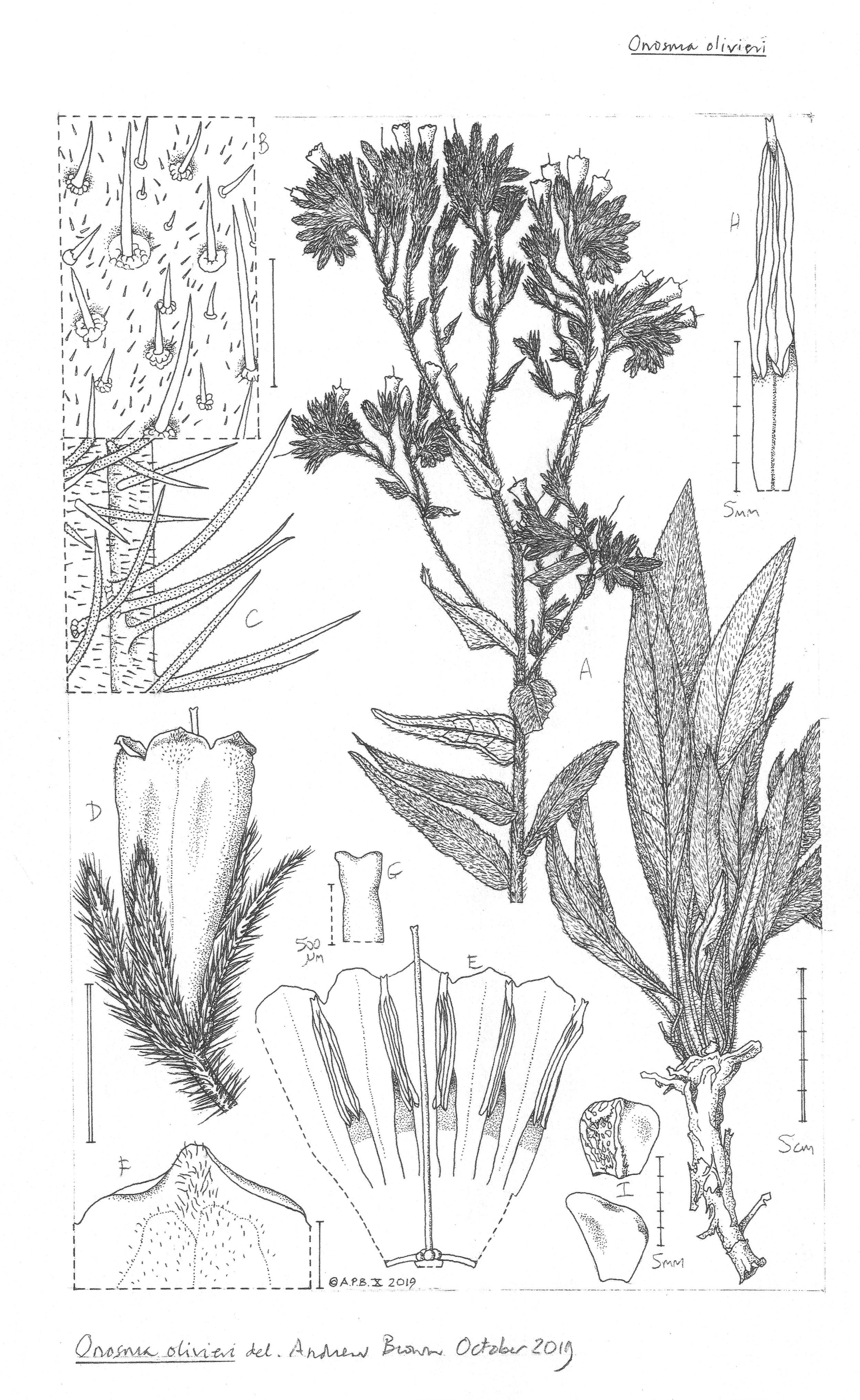
Some of the specimens came bearing challenges for the illustrator. For instance in Onosma (Boraginaceae) the plant is covered with densely packed white hairs and has pendent tubular flowers of varying colour. The illustrator needs to show the hairiness without overdoing it - drawings are normally reduced for printing and one doesn't want a plant to be black all over. In addition, the hairs in this genus are often sculpted and there may be more than one sculpting pattern so all that has to be shown as an enlarged detail because it helps the observer achieve an accurate identification of material brought in from the field. I have attached a scan of the completed plate of Onosma olivieri (as submitted to the editors). It measures 17.25 x 25.0 cm. The Arabic front cover (of course on the back of the book) is also shown.
This flora is very much a 'niche' project but I have been honoured to be asked to contribute to it and, after sixty years, to see it completed.
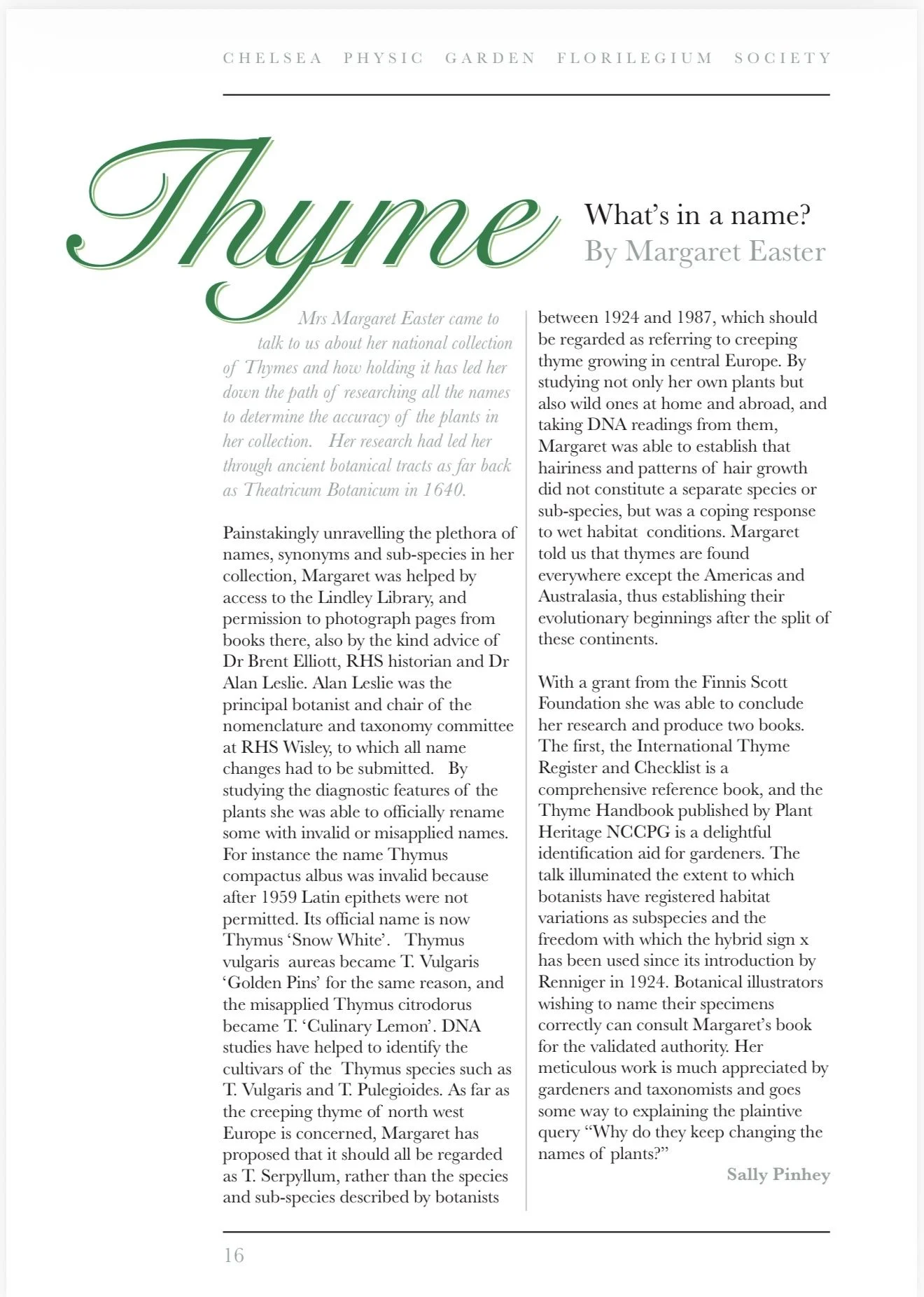





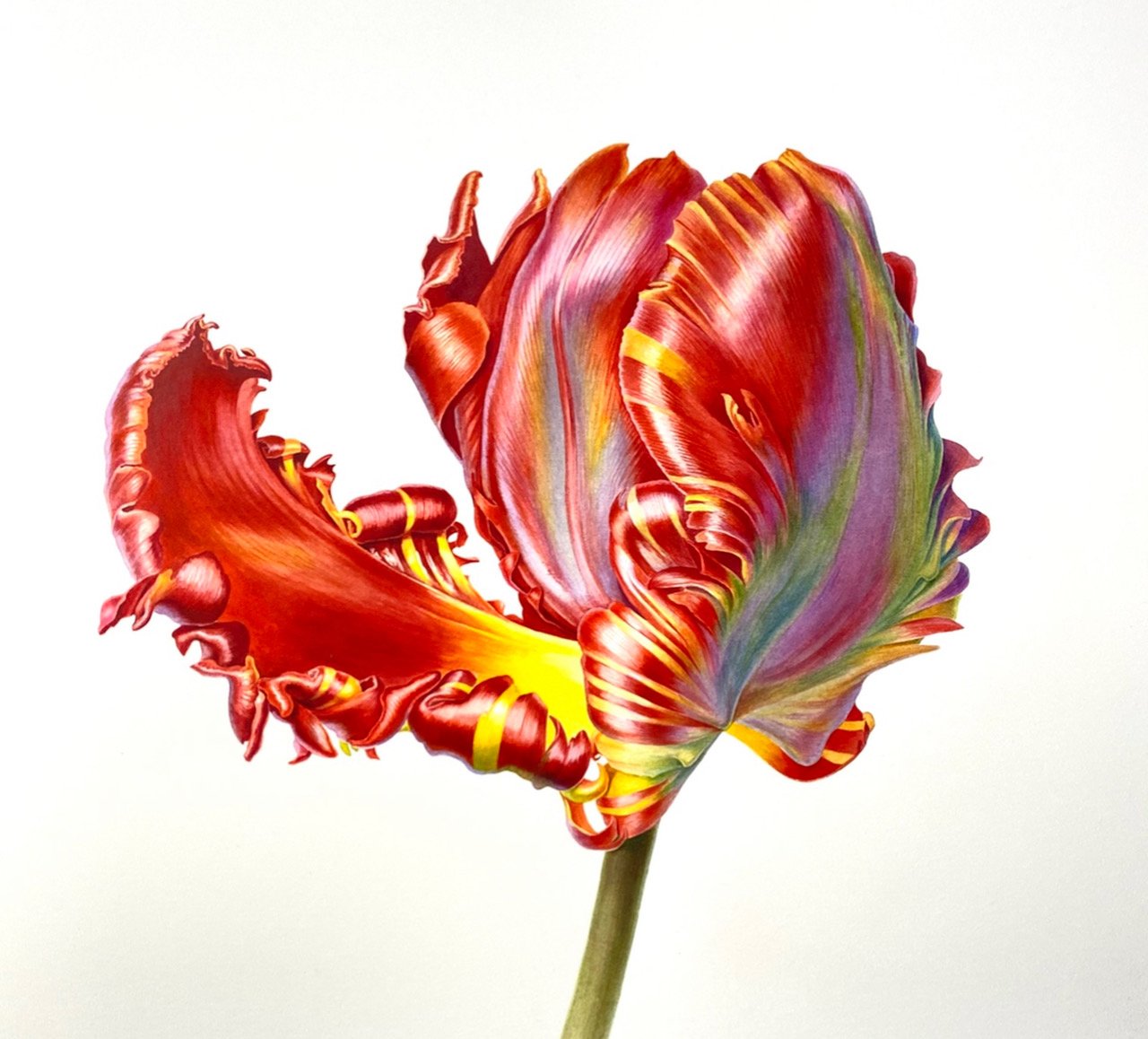
“Tulips” by Rui Jiang, 2024
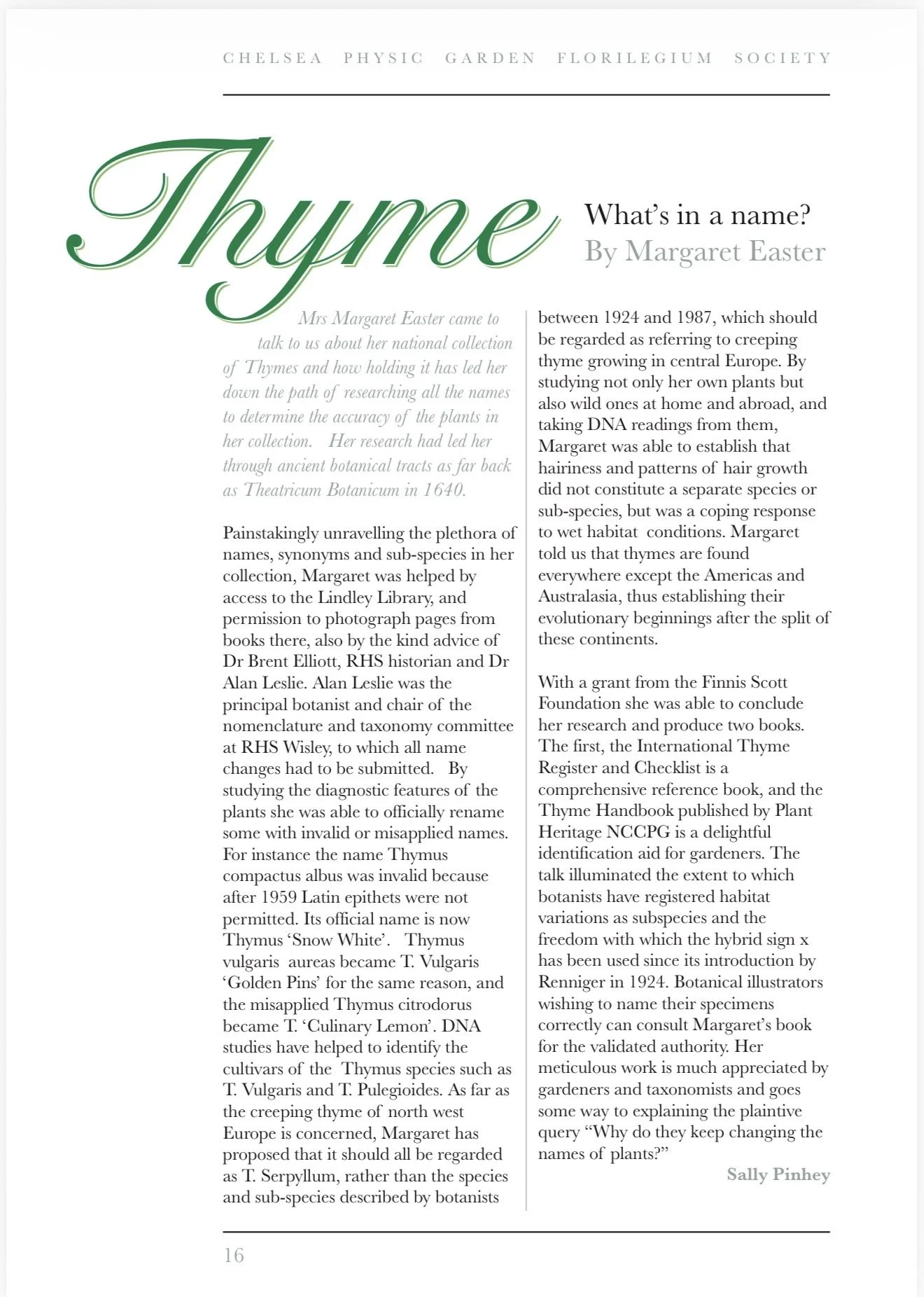
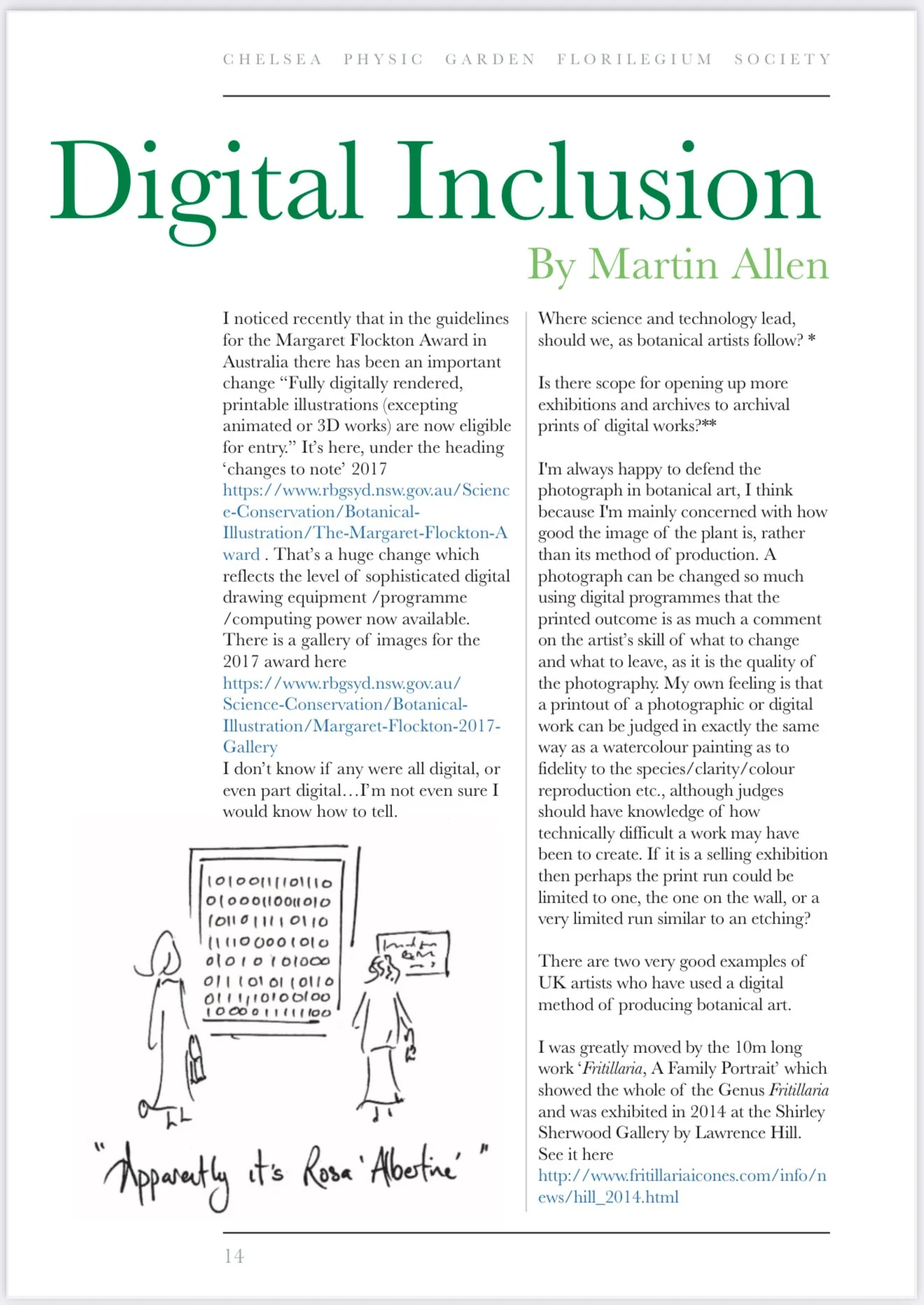
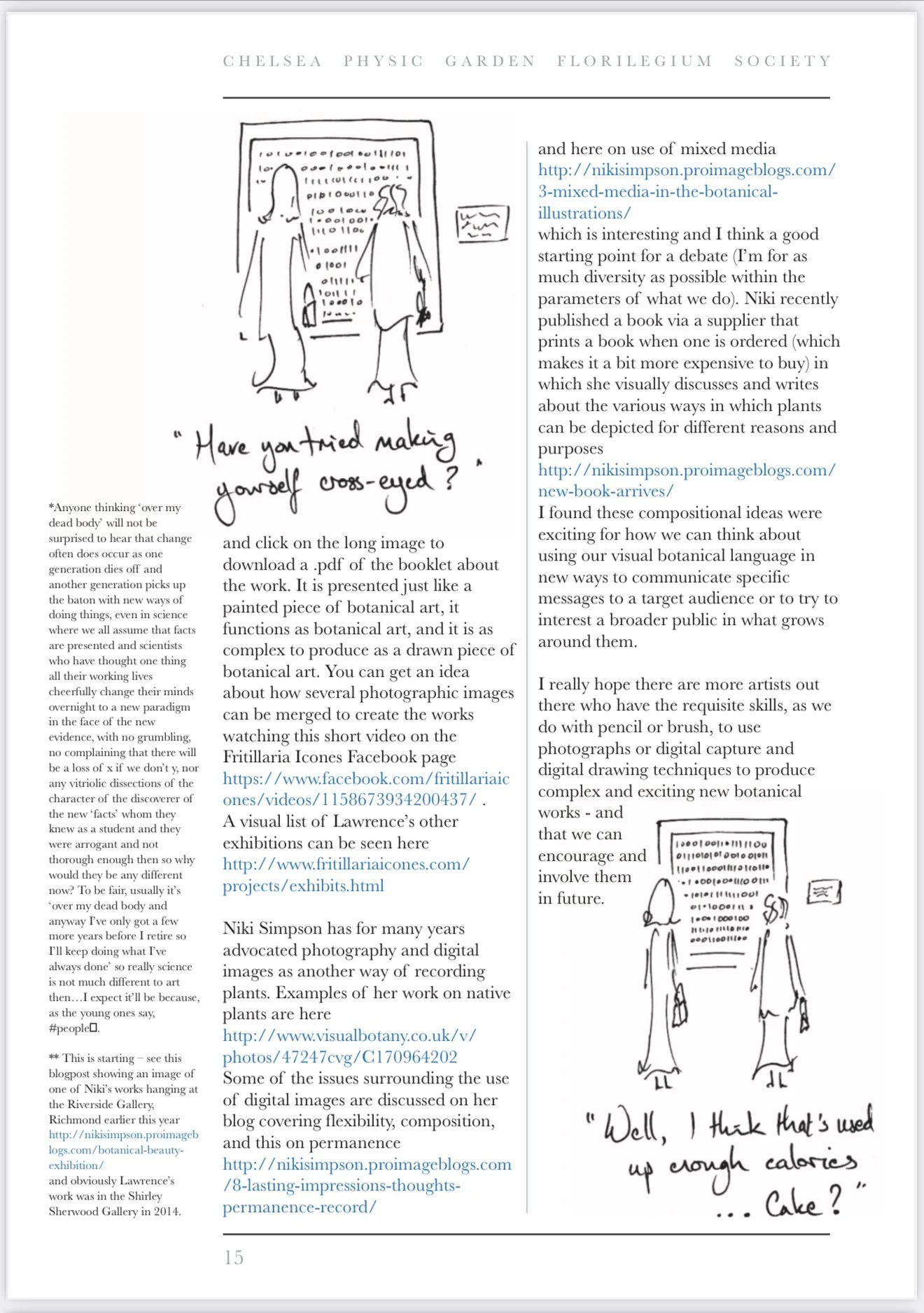
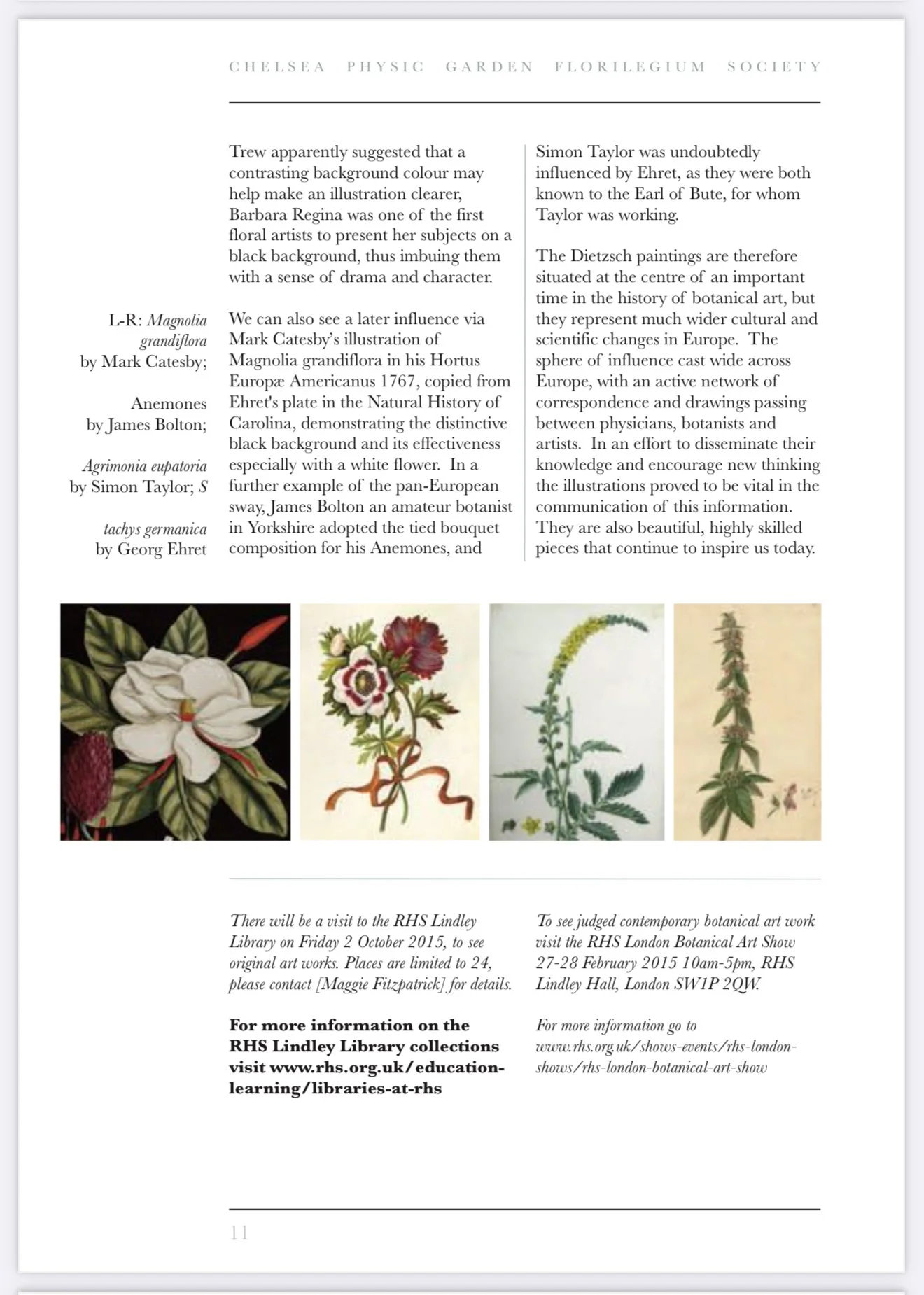
In this new 30th Anniversary blog series for 2025, Editor Guy Willam Eves has curated a selection of articles from our Newsletter Archives, from the past 30 years! Next up, a post all about tulip painting by member Rui Jiang from 2024. Enjoy!

" According to an ancient Persian legend, the tulip was born of the blood and tears of a girl who had ventured into the desert in search of her lover. It thereafter became a symbol of love.’ –<Nature and Its Symbols> by The J. Paul Getty Museum.

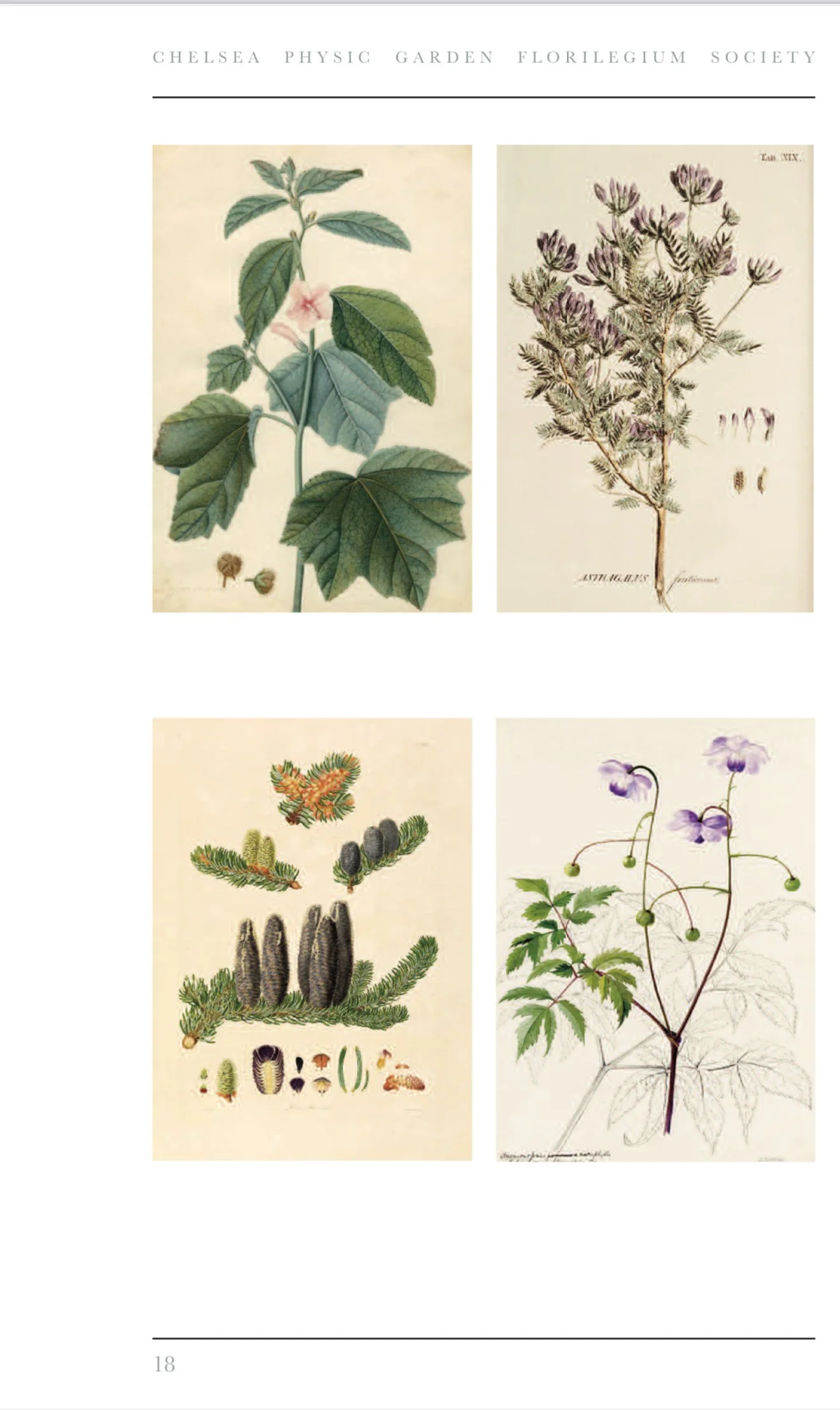
The very first tulip bulbs I purchased were back in 2017, during a course at the Chelsea School of Botanical Art. It was in the meeting room of the Chelsea Physic Garden Florilegium Society where I painted my first botanical painting, a tulip! It sounds dramatic, but I had never paid attention to the flower itself and the bulb in the spring before the course. Botanical art certainly led me into another world of nature, a world of wonder and curiosity! Gradually, I purchased different bulbs from the local garden centre or online in autumn, then planted them in November. Surprisingly, I ended up with 101 varieties in my garden over the past 5 years.

The tulip genus is scientifically known as Tulipa, and they are flowering plants that belong to the Liliaceae Family. Tulips are unsurpassed in the bulb world as a source of both subdued and brilliant colours from early to late spring. There are dwarf species that open their small flowers on 4-inch (10 cm) stalks in early March, and next to them, you can have 30-inch (75 cm) Rembrandt Tulips in full bloom in mid-May. The colour range is equally extensive, with nearly every shade from pure white to near black. The subject of Tulip color is fascinating - most varieties are single-coloured or simple blends, but there are ‘broken’ Tulips where second or third colours appear as complex streaks, splashes, or feathery lines. This effect is caused by a virus, and at one time, such bizarre varieties commanded unbelievably high prices, but they are no longer popular.

Most tulips are used either in formal bedding schemes or in containers, but there are other places for them in the garden. The tall varieties can be used as informal colourful clumps in mixed borders, and dwarf varieties are useful in the rockery. Choose your bulbs carefully and do not be in a hurry to plant them - November is early enough. Remove dead flower heads if it is practical. The problem with garden tulips is that they tend to deteriorate or disappear if not lifted every year, so the usual practice is to lift them when the foliage has turned yellow and then store them in a frost-free place until replanting time in November. Another problem is that Garden Tulips should not be planted in the same bed year after year.


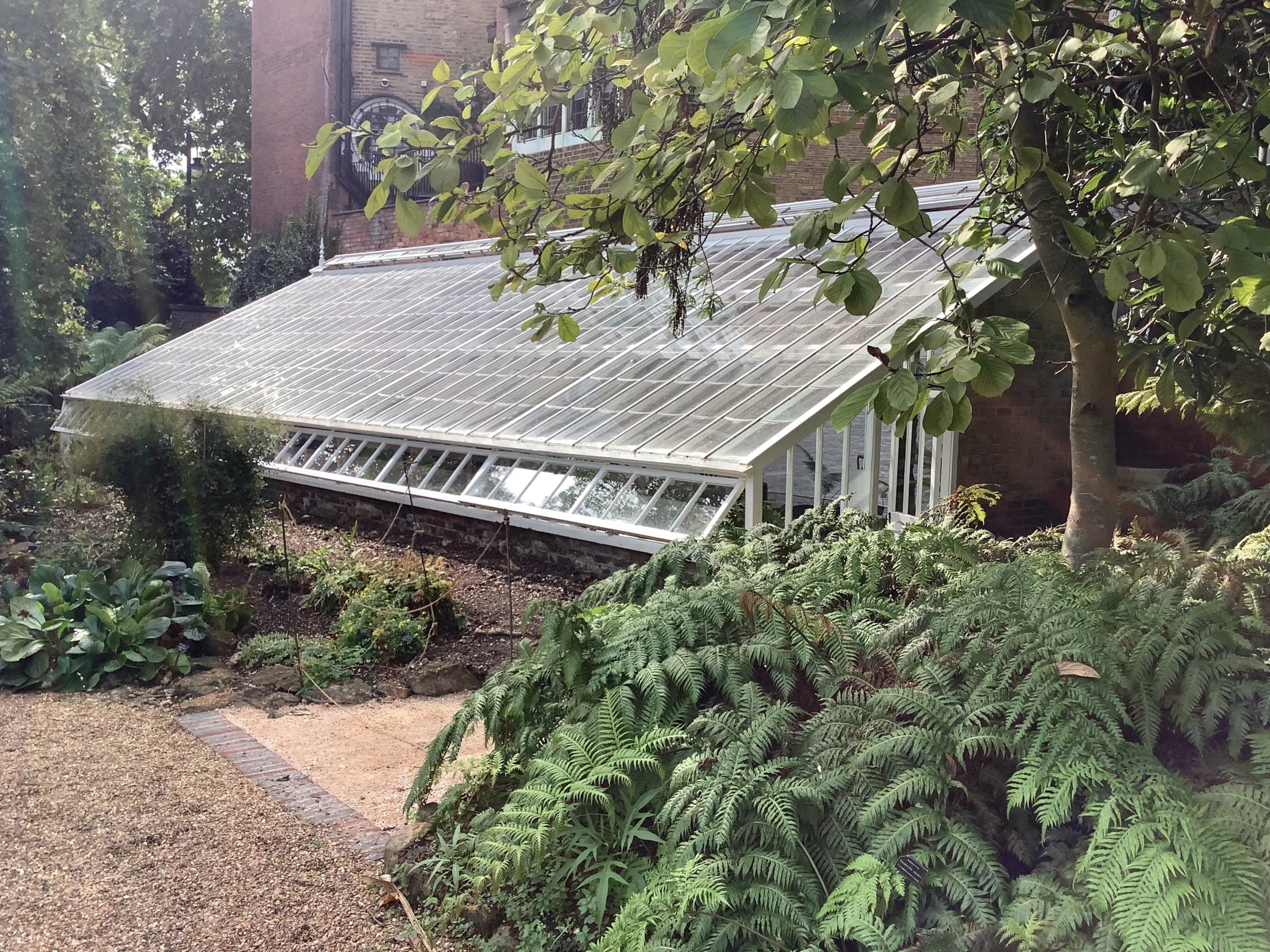
“The Glasshouse Restoration Project”, 2023
In this new 30th Anniversary blog series for 2025, Editor Guy Willam Eves will be curating a fine selection of articles from our Newsletter Archives, from the past 30 years! To kick it off here is a post all about The Chelsea Physic Garden Glasshouse Appeal from 2023, specifically The Cool Fernery. Enjoy!

Make it stand out
Whatever it is, the way you tell your story online can make all the difference.


“A new Affiliation” by Karen Stewart, January 2025
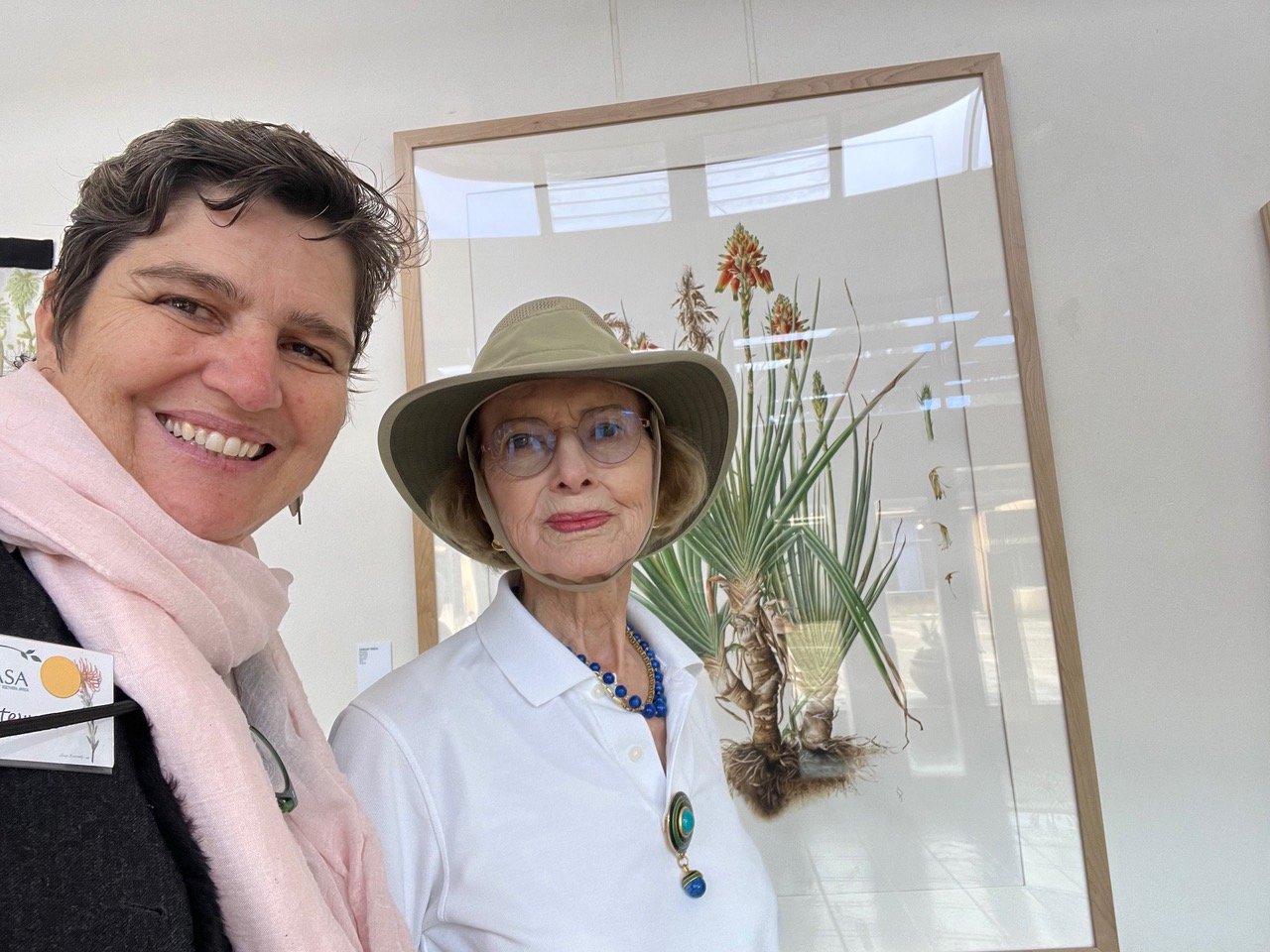
Karen Stewart and Margaret King, Founder
“How the Chelsea Physic Garden Florilegium pollinated an idea that took root in South Africa”
by Karen Stewart, Stellenbosch University Botanical Garden Florilegium
In April 2023 I curated a 150 botanical painting exhibition at the world-famous Kirstenbosch Botanical Garden in Cape Town, for BAASA (Botanical Artists’ Association of Southern Africa). During the exhibition I met Margaret King who is a South African-born botanical artist, currently living and working in London. She was in SA to celebrate her 90th birthday, and came to see the exhibition. We got chatting and she told me all about the Chelsea Physic Garden’s collection, to which she has contributed work. She said to me: “You should start a florilegium here”. It was like a firework went off in my head.
Karen Stewart and Mary Ellen Taylor, Chair
In July of 2023, my husband and I were lucky enough to be visiting my sister in the UK. I had spoken to Mary Ellen and set up a meeting at the Physic Garden. Mary Ellen was extremely generous with her time and knowledge, meticulously explaining how the florilegium works and how it started.
I left that meeting inspired and realised that a project at this kind and scale was possible. And when I got back home I started thinking about how to actualize the project.
In 2023 and 2024 I had curated two Botanical Art exhibitions for Stellenbosch University Botanical Garden (SUBG). I was really impressed by the scientific and practical work the garden is doing to conserve our rapidly disappearing indigenous flora. I also felt that the connection with the university was important because of its proximity to botanists, young minds, future patrons and fans.
Due to the practical horticultural expertise SUBG, the gardens have also become centre for reviving and keeping alive specimens of red data species – some of which arrive in sacks that have been confiscated from traders in illegal plants that have been plundered from the wild.
I am currently working on a permanent botanical art collection for the garden and thus far have secured 16 paintings. South Africa has a number of extremely talented botanical artists who have been a huge help to get the project off the ground. The curator of the Garden, Dr Kirkwood, is also very supportive of this idea – which is still evolving.
I sent our recent exhibition catalogues to Dr Shirley Sherwood appealing to her for help and we met when she was in Stellenbosch in January. She was very excited at the idea of a new florilegium starting in South Africa and has offered her generous support to get it up and running. It was decided that the focus for the first phase of the project would be on the critically endangered red-data floral species of Southern Africa.
Due to the high number of local flora species that are rapidly disappearing – because of changing climatic conditions and illegal poaching – we are still looking for funders to take the project to its full potential and build on the momentum that the world-class Grootbos Florilegium has created.
We feel honoured to have made an affiliation with Chelsea Physic Garden’s Florilegium Society. We hope this partnership flourishes into the future.